News

01-27-2013
 New Books
Visit the Books Page on the homepage to See our Latest Releases
New BooksVisit the Books Page on the homepage to See our Latest Releases
The Secret Geometry of Coral Castle Return to Homepage
Introduction
This report presents a genuinely remarkable constellation of real connections between a single geometric angle—135°—and a surprising range of phenomena of Coral Castle. The connections documented here are not argued to be causal or conspiratorial. They are heavily fact checked and presented as what they are: a verified record of how a fundamental geometric principle appears, independently and repeatedly, across Coral Castle and the natural world.
Located in Homestead, Florida, the Coral Castle is a
mysterious limestone sculpture garden built single-handedly by Latvian
immigrant Edward Leedskalnin between 1923 and 1951. Ed quarried and
carved over 1,100 tons of coral rock and said he knew the secrets of
how the Pyramids were built. Many people believe he used a magnetic
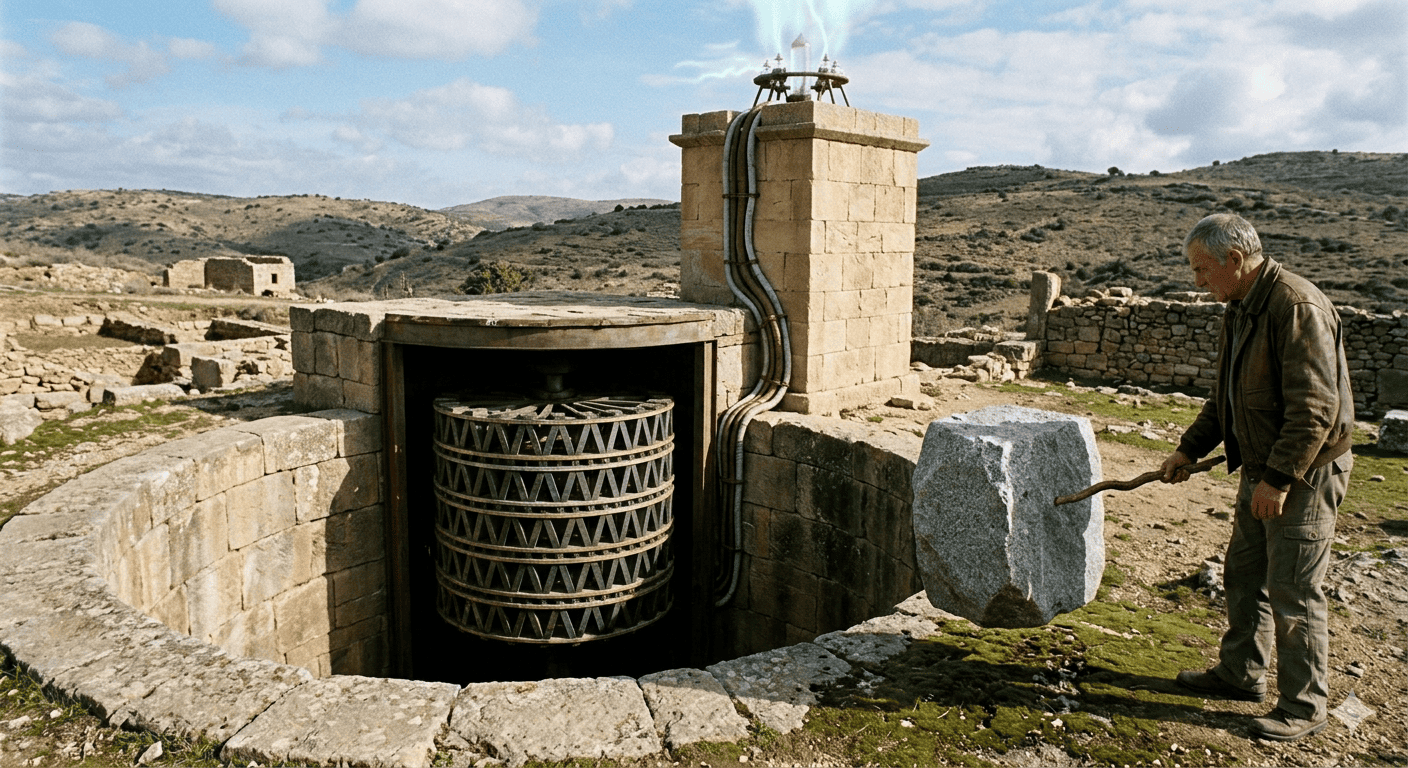
force to levitate large stones. This may have been Ed's Flywheel.
Verified features of Coral Castle include:
• A 9-ton revolving gate, balanced
so precisely it can be moved with a single finger.
• An accurate sundial.
• A telescope aligned precisely
with Polaris, the North Star.
• A 28-ton obelisk.
• The inscription “21 Forth” on the
door of the structure, near a bell and a 16-pointed sun carving.
Leedskalnin self-published a pamphlet titled Magnetic Current in 1945,
in which he claimed all matter was held together by individual magnets.
He is also quoted as saying he had “discovered the secrets of the
pyramids.”
Hypothesis
Ed may have hooked the magnetic
flywheel to a small gasoline motor to allow the magnets to spin.
As the magnets rotated on Ed's flywheel it
generated a field of energy that exited the Tower altering the magnetic
field in the local region. This may have been done by the mysterious
black box that everybody talked about. This black box was most likely
filled with iron powder, or magnetite which is a mixture of sand and
iron oxide. The right amounts may have acted as a tuning for the energy
as if flowed throughout his property. This energy may have been
channeled through
a
rod. The magnetic field that Ed was
altering or enhancing at 180 degrees may have created a torque effect.
Ed may have held a rod at a specific angle at a large stone to reduce
its weight. This angle may have been one of the following angles 1.39
or 1.35 degrees.He used conscious intent to move the stones as their
weight was reduced. He may have used a technique similar to Light as a
feather, stiff as a board method. This is where 2-3 people on each side
put 2 fingers from each hand under the person laying down while
repeatedly saying "light as a feather, stiff as a board" in the dark
and the person's weight becomes significantly reduced. Consciousness
also plays a major role in forecasting a stock up to 48 hours ahead
into the future using the Time-Gate
mechanism. So the missing component in Coral Castle is consciousness.
No wonder nobody has been able to figure out how it was done!
If Ed had been able to neutralize gravity over his entire property than all the stones would have floated off and away. This is why the stone weight was reduced just enough to move them with a block and tackle. While the energy field was active Ed used block and tackle to manage the stones into place while the weight was reduced.
Ed's Original Magnetic Flywheel consisted of v-shaped magnets are arranged in five rows, with each row containing 16 magnets (now changed to 24 after rennovations). Below is an replica of how this energy field may have affected stones that are on an earth Ley-Line.
Taking
Advantage of Magnetic Torque
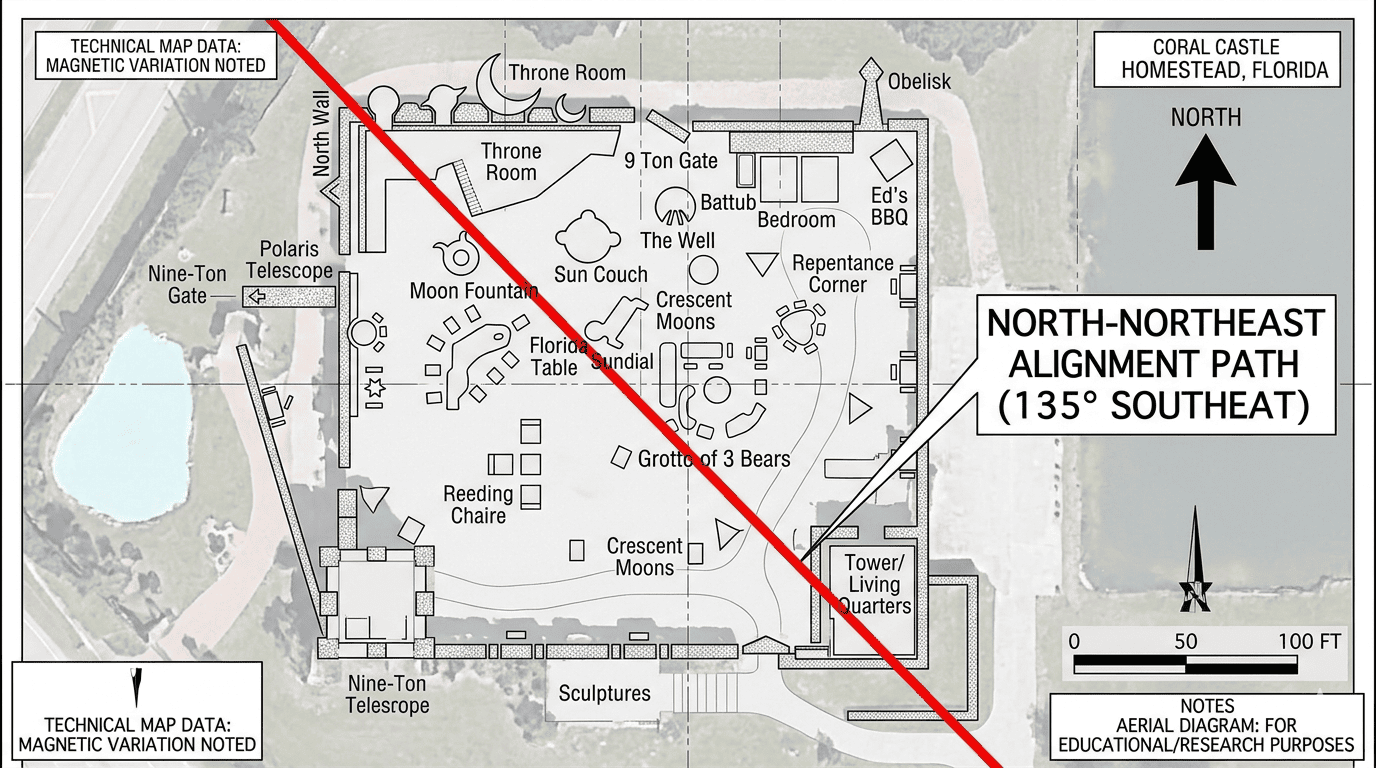
Why would Ed have put his tower in the lower right of his
property (allowing a 135 degee angle to intersect right through his
property) if he was not taking advantage of this angle that created
magnetic torque? If Time-Gates
are creating synergistic forces to break world records (see
this .pdf), than a magnetic force of torque may be occuring.
Time-Gate relies on the orbit of the moon and Ed's 180 degree
line pass straight through his moon garden. Coincidence? This may be
the result of a type of geomagnetic synergy within the local magnetic
field of a certain region.

The
“21 Forth”
Inscription and its link to 135 degrees

On the large iron door entry to Coral Castle is the inscription "21 Forth" that sits directly next to a sun with 16 rays of pointed light (representing the original 16 magnets and Eds Sweet 16) with “RING BELL” near which an actual bell is hung with a line starting at the top left corner which passes through the sixteen pointed sun and terminates in the bottom right corner near the “21 Forth” all at 135 degrees. It is believed this is actually a drawing of his machine setup and the door itself may have been used as a tool to cut and quarry the stones.
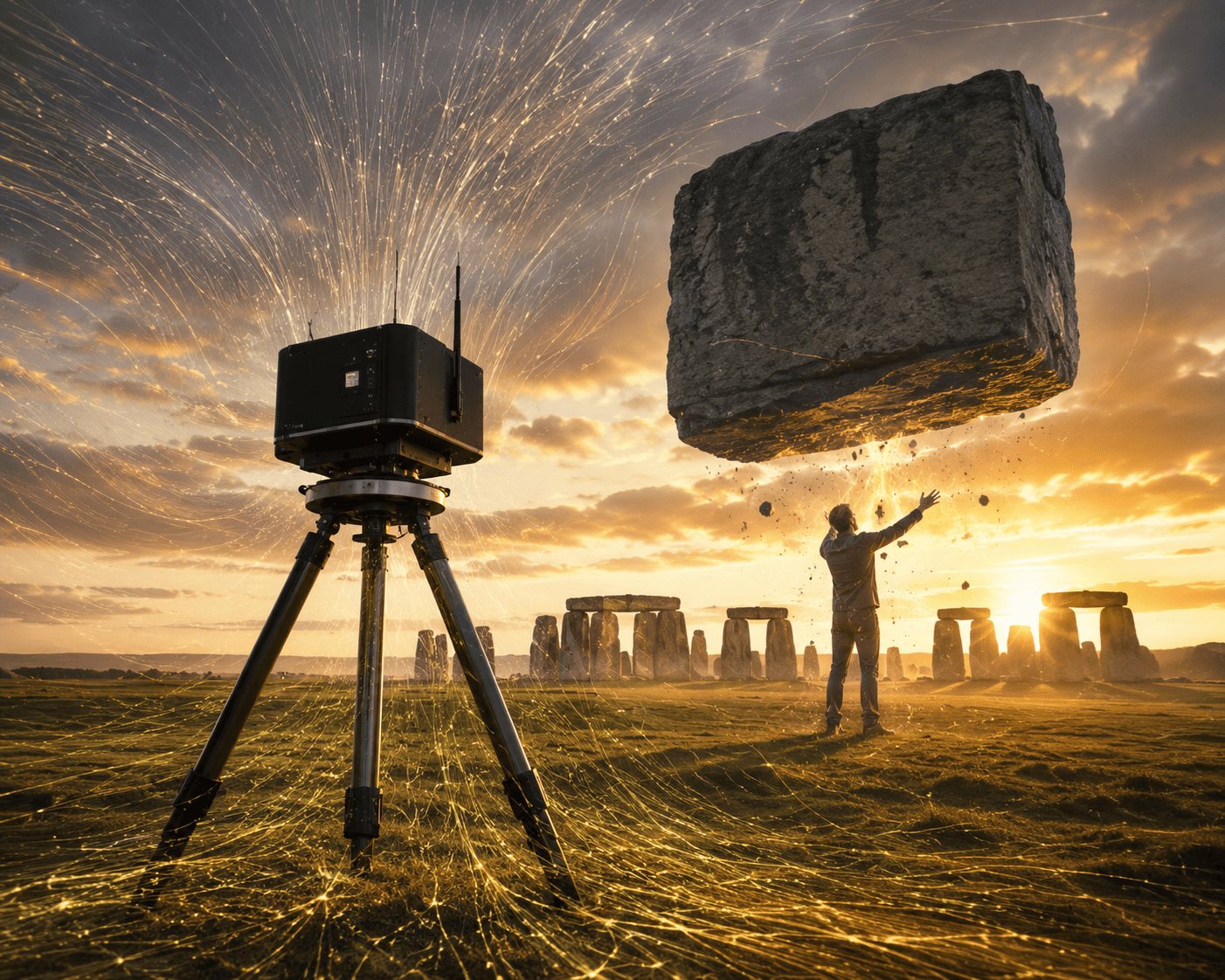
Many people refer to the strange black boxes at the top of Tripods that were seen around Coral Castle. It is my hypothesis that these black boxes were filled with a mixture of Iron Oxide and possibly sand to create Magnetite. Let's look at the data:
The rotating sun chair is a famous stone carving in the Coral Castle (Homestead, Florida). Carved by creator Edward Leedskalnin in the 1920s, it is a comfortable, multi-ton seat designed to swivel on a central axis, allowing the user to rotate in it. This is a representation of the Sun's Solar Rotation, which rotates over a period of 29 days each month. The sun itself does not rotate, but its plasma circulates around its circumfrence. Each angle of rotation has the following effects:
The Parker Spiral
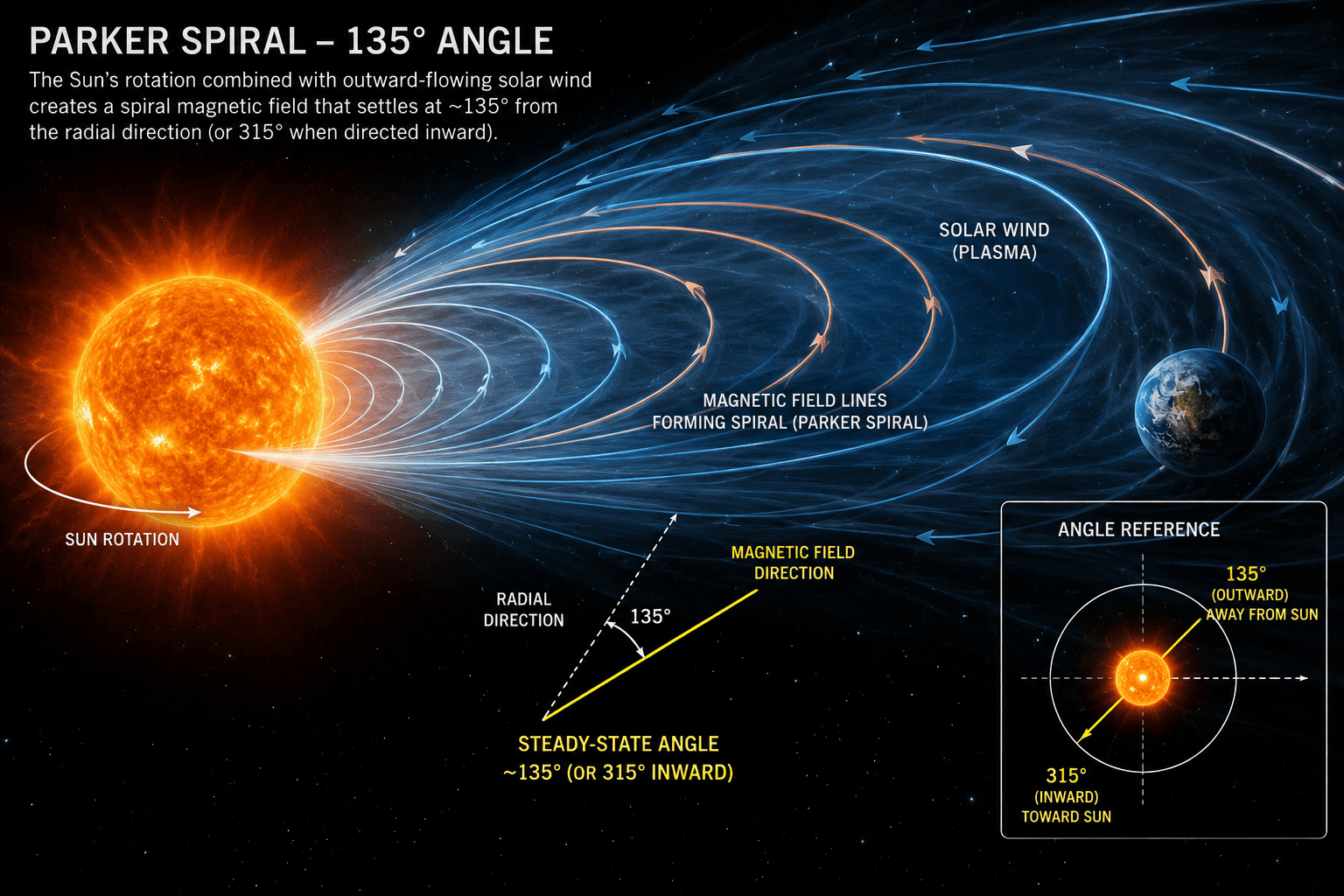
The Parker spiral is the large-scale spiral shape of the Sun's magnetic field as it travels through the solar system. It is created because the Sun rotates while it continuously ejects the outward-flowing solar wind. The 135° solar wind interaction refers to the Parker spiral, which is the geometric shape the Sun’s magnetic field takes as it travels outward into the solar system.
All large monuments that have large stones in them always had a stone or structure that aligned with the winter solstice. At the winter solstice, the sun sets at its furtherest point in the southwest. At the exact point of the winter solstice, solar particles are at their lowest rates, which reduces earth's magnetic field. Space weather phenomena like the Kelvin-Helmholtz instability (which allows charged solar plasma to enter the magnetosphere) are at their lowest rates near the solstices. The specific angle of the Earth's magnetic dipole during the solstice makes this interaction much weaker compared to the equinoxes.
References:
Seasonal and diurnal variations of Kelvin-Helmholtz Instability at terrestrial magnetopause. S. Kavosi et al. May 2023
The 135° Interaction
Because the Sun rotates while emitting streams of charged particles, the magnetic field lines stretch and curve, naturally settling to the average angle of 135° from the radial path (or 315° when directed back toward the Sun). As plasma escapes the Sun at high speeds, the Sun’s rotation turns its magnetic field into a spiraling structure. This magnetic field aligns roughly at a 135 degrees or (315 degrees) angle.
The Interplanetary Magnetic Field (IMF):
If the spiraling field aligns properly with Earth's magnetic orientation, it allows explosive "magnetic reconnection" to occur, pouring energy into the upper atmosphere. When this highly angled solar wind collides with Earth's protective magnetic shield, where it it becomes highly compressed.
Effect with Iron Oxide
When Solar particles interact with iron oxide, they induce significant magnetic and chemical changes. Through the Lorentz force, the charged particles generate local electric currents and induce remanent magnetization. Additionally, they can chemically reduce non-magnetic oxides (like hematite) into highly magnetic forms (like magnetite) through space weathering.
The Lorentz Force can physically counteract or cancel out the magnetic force acting on an object, or cause moving charged particles to curve away from magnetic field lines, effectively neutralizing the magnetic influence on them. The Lorentz force can effectively neutralize gravity for charged particles or conductive materials by using electric and magnetic fields to create an equal and opposite upward force. There is even a patent taking advantage of this effect (Structure Design and Control of Magnetic Levitated Needle Driving System) "a new type of Lorentz force actuated magnetic levitated needle"
Alignment and "The Diamond"
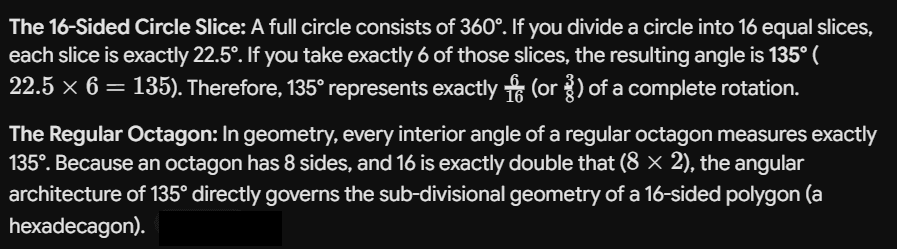
In "Earth Grid" and magnetic theories, 135 degrees is often referred to as a "Major Diagonal." 135 is an obtuse angle that represents a perfect intersection of the square and the octagon. It is the exterior angle of a regular octagon.
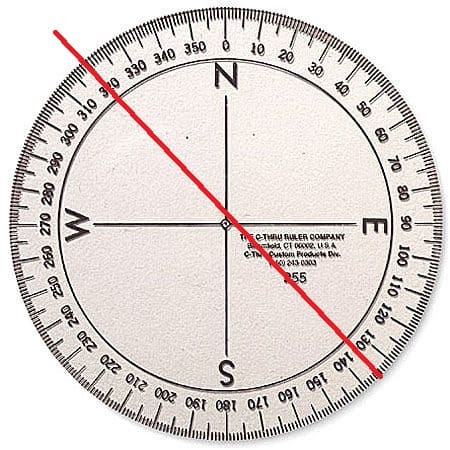
The Compass: If 0 degrees is North and 90 degrees is East, 135 degrees is Southeast. The line runs south east through to north east as shown in 21 Forth with is a line at 135 degrees.
The Harmonic Offset
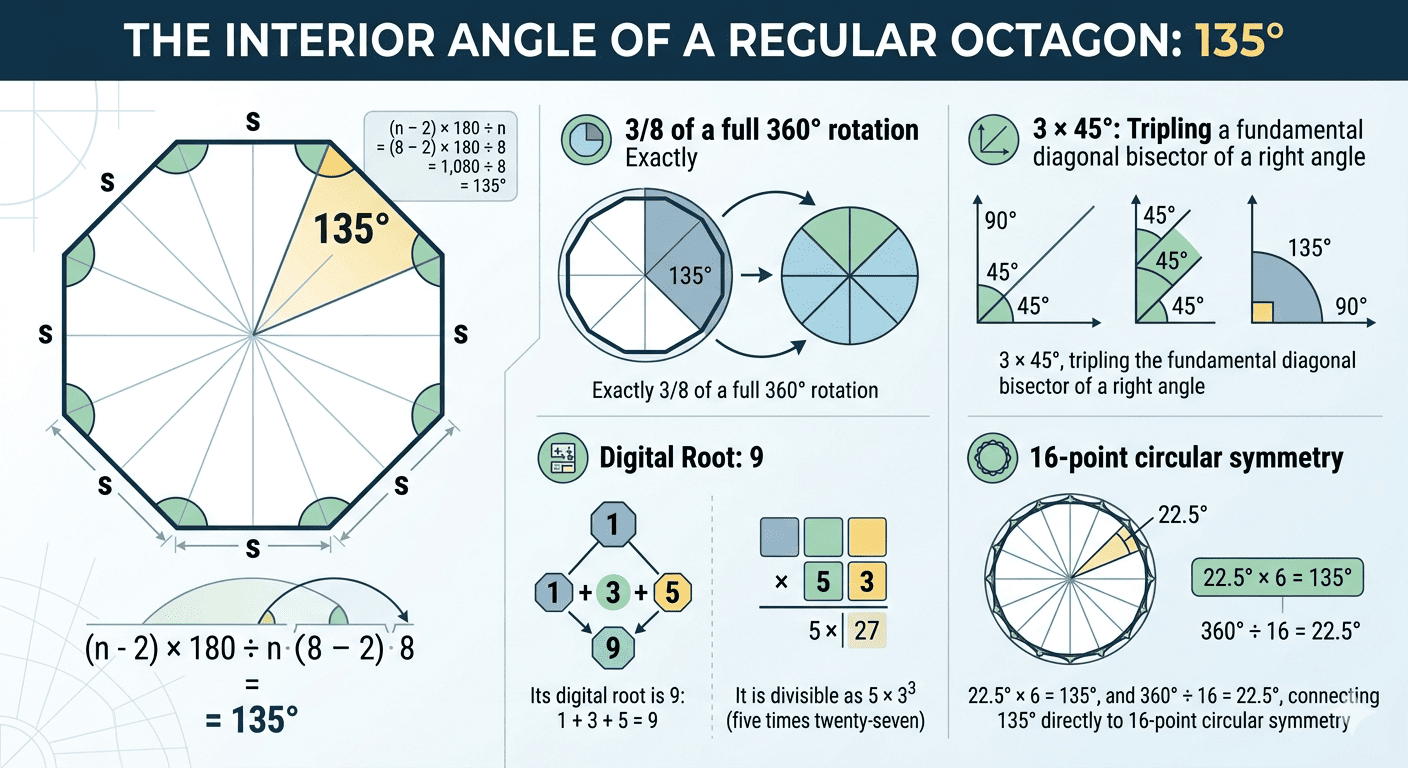
Researchers like Bruce Cathie argue that for "magnetic flight" or levitation to occur, the energy must be manipulated at specific intervals of 45 degrees or 22.5 degrees. 22.5 times 6 = 135 degrees. 3/8 of a full rotation (3 × 45° = 135°; 3/8 × 360° = 135°) — uniting the Trinity (3) with the Octagon (8). The 45° angle tripled — where 45° is itself the angle of perfect diagonal balance, midway between North and East. The number 135 is a direct multiple of the 22.5 building block." In a 16-point circle (like the one used in Leedskalnin’s flywheel or the theoretical Egyptian "vortex" circle), 135 degrees represents the 6th position or "pole."
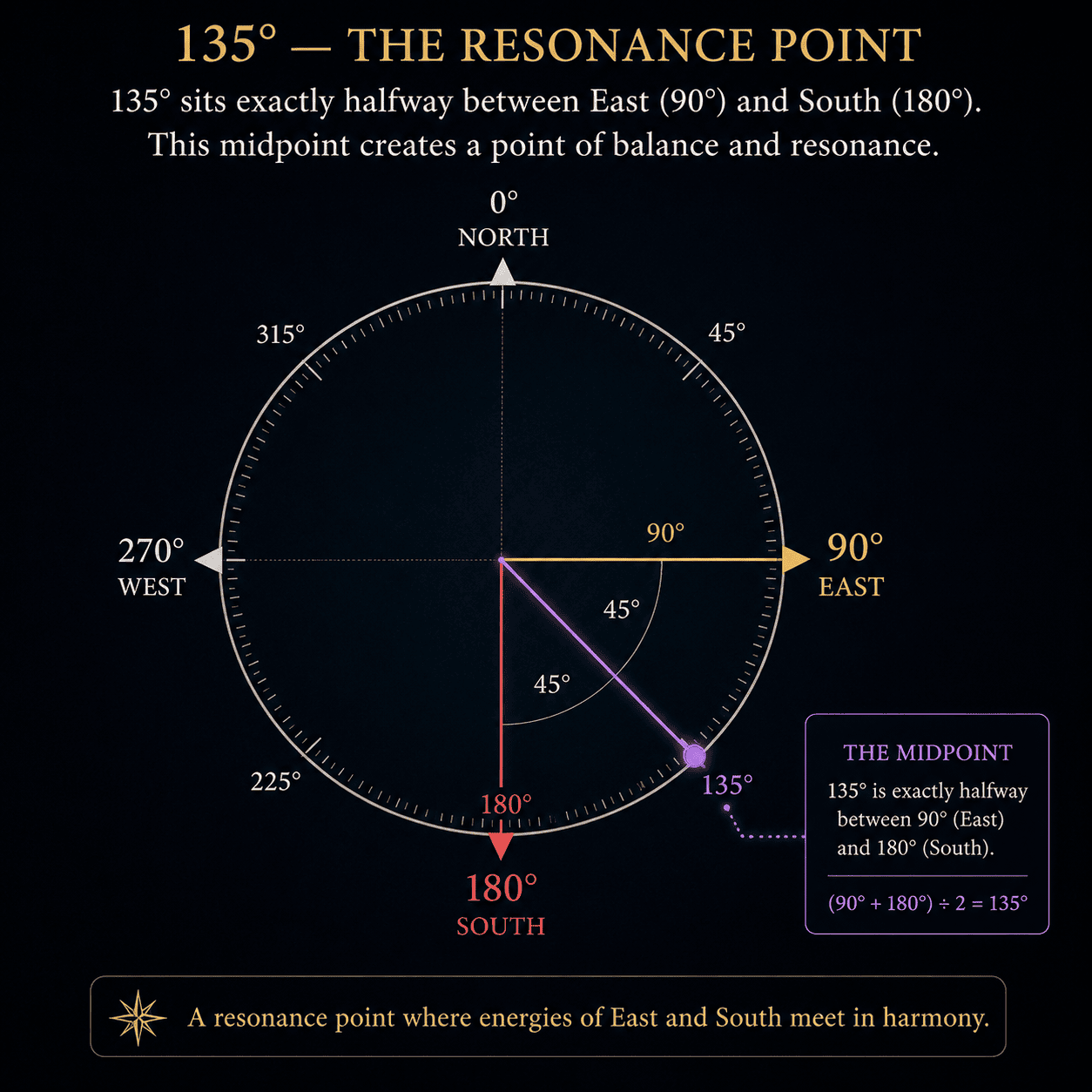
135 is considered a "resonance point" because it sits exactly halfway between East (90 degrees and South 180 degrees). Proponents of the 135-degree theory suggest that he aligned his "telescope" and his primary "working stone" along a Northwest-to-Southeast axis (315 degrees to 135 degrees).
135 is exactly half of 270 and a multiple of 45. These are considered "harmonic numbers" in the theory of the Earth's magnetic grid. Proponents claim that the latitude and longitude of Coral Castle, when converted into "grid degrees" or analyzed through spherical geometry, yield the number 135 (or its harmonics),
Some Coral Castle researchers believe this specific diagonal alignment allowed him to "tap into" the Earth's rotational magnetic flux more efficiently than if he had aligned strictly North-South.
The 135 degree angle also appears in broader cultural contexts:
The 135th meridian East passes through Akashi, Japan, where Japan's official standard time meridian is set (Japan Standard Time = UTC+9). This meridian was established in 1886, during a period of intensive Masonic and esoteric influence on Japanese modernization following the 1853 opening of Japan.
Alexander Graham Bell (who famously experimented with sound and frequency, akin to Leedskalnin's magnetic theories) was born at 16 South Charlotte Street in Edinburgh, while Robert Louis Stevenson lived at 21 Forth Street in Edinburgh. Alexander Graham Bell was born at 16 South Charlotte Street in Edinburgh in 1847, three years before Stevenson (born 1850)—a short distance away.
During winter in the Northern Hemisphere, the sun rises further, towards the southeast. The sun on the door is a clue to the 135 degree angle that where one can use magnetic torque via a line of force to reduce gravity. This line of force may have a yearly peak of its natural torque energy during the season of winter.
The speed of light in a vacuum is exactly 299,792,458 metres per second. Dividing this figure by 2,221,067 yields approximately 134.976, which rounds to 135. 22.5° × 6 = 135°, and 360° ÷ 16 = 22.5°, connecting 135° directly to 16-point circular symmetry.
A full circle (360) divided by 16 equal parts results in segments of 22.5 degrees. Magnetic harmonic gears exploit 22.5 degree intervals to achieve high gear reductions without physical tooth-to-tooth friction. By aligning magnetic fields in (22.5 degree) pole pairs, the torque ripple is smoothed, generating a non-contact, high-torque reduction.
The
Golden Angle
Connection
There is significant, albeit partly theoretical and speculative, interest in the relationship between the number 137 and the Fibonacci sequence, primarily through their mutual connection to the golden ratio (phi approx 1.618) and geometry in nature. While 137 is not a Fibonacci number itself, its significance arises in how it approximates fundamental constants and shapes.1. The Golden Angle (137.5 degrees)The most direct link is the Golden Angle (137.5 degrees), which is derived from the Fibonacci sequence and the golden ratio.The Connection: When you divide a circle into two arcs based on the Golden Ratio, the smaller angle is approximately (137.5 degrees).Nature's Prevalence: This angle dictates the arrangement of leaves, seeds, and petals in plants (phyllotaxis) to maximize space and sunlight, creating a Fibonacci spiral.By using an offset angle of roughly 135 to 137.5 degrees, the plant ensures that no two leaves ever perfectly overlap. This optimizes sunlight absorption for photosynthesis and creates a perfect spiral that channels rainwater directly down to the roots.
The Peregrine Falcon’s
Hunting Spiral
When a peregrine falcon spots prey from high above, it doesn't dive in
a straight line. Instead, it attacks using a path called a logarithmic
spiral, holding its body at a precise angle relative to its target. A
falcon's sharpest vision is not straight ahead, but out of a
specialized "fovea" located on the sides of its eyes, oriented at a 45°
angle. If the falcon flew straight at its prey, it would have to turn
its head to keep it in focus, which would create massive aerodynamic
drag at speeds over 200 mph. Instead, it dives along a spiral that
keeps its head perfectly straight
and aerodynamic, locking its target at a 45° angle from its beak. This
splits its geometric path into a 135° supplementary angle relative to
its flight trajectory, maximizing aerodynamic efficiency while keeping
its prey in crystal-clear focus.
For birds, bats, and monarch butterflies migrating across North
America, the Northwest-to-Southeast axis (the 135° mathematical
corridor) is heavily exploited. During seasonal shifts, large-scale
weather fronts create predictable, powerful prevailing winds blowing
along this exact line. When an insect flies, its compound eyes track
"optic flow"—the speed and direction at which the landscape streams
past them. Neurobiologists have discovered that these insects have
specialized visual neurons (called LNO neurons) in the central complex
of their brains that are hardwired to respond maximally to visual
expansion occurring at a 135 degree angle relative to their heading. By
calculating visual data along these 135° vectors, the insect's brain
can instantly determine if it is drifting off-course due to crosswinds
and compute exactly how to steer—allowing it to maintain a straight,
precise trajectory while traveling northwest or southwest back to its
nest.
The Fine-Structure Constant
In quantum physics, the fine-structure constant (α) is a dimensionless number approximately equal to 1/137. It governs the strength of the electromagnetic interaction between charged particles. Physicist Richard Feynman famously described it as “one of the greatest damn mysteries of physics.” The denominator of this fundamental constant—137—sits between the golden angle (137.5°) and the octagonal angle (135°), a numerical coincidence that has intrigued physicists and mathematicians for decades.
Sweet 16
Ed always talked about his Sweet Sixteen. Later he moved
Coral Castle 16 kilometers north. The layout of Coral Castle and his
home-made DC generator rely on a mathematical matrix based entirely on
the number 16 to achieve levitation of stones.
Gors Fawr stone circle (shown in the next picture) is situated near the Preseli Mountains in Pembrokeshire, Wales. The circle is roughly 70 feet in diameter and consists of 16 stones—a number that produces the same 22.5° interval geometry as the Vatican windrose when arranged in a full circle. The stones are composed of spotted dolerite (bluestone) and local glacial erratics. The main winter solstice alignment involves two tall outlying standing stones located about 134 meters away from the main 16-stone ring. One is called the "Dreaming Stone" and points directly at the solstice sunset.
Edward Leedskalnin claimed all matter was held together by
individual magnets (detailed in his 1945 pamphlet Magnetic Current).
The 16-stone Gors Fawr stone circle in Wales (which is part of the
22.5°/135° geometric family), has stones made dolerite, which is rich
in iron-bearing minerals like magnetite and possess a "natural remanent
magnetisation." This creates a thematic bridge between Leedskalnin’s
focus on magnetism and the magnetic properties of stones used in
ancient 16-fold sacred geometry sites.
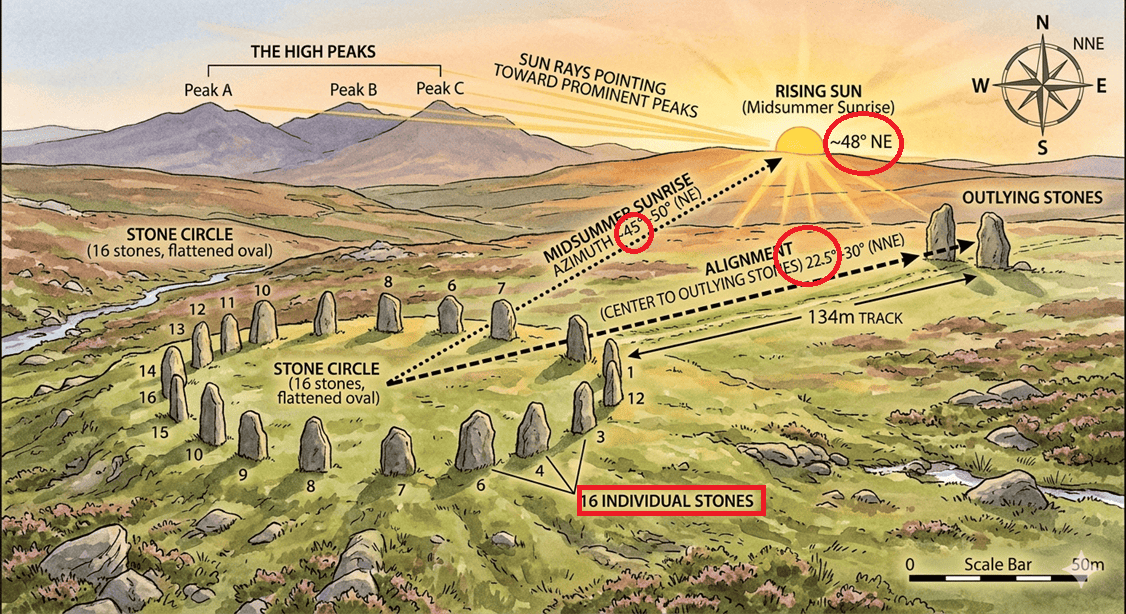
While the circle itself is a slightly flattened oval of 16 stones, the primary directional focus comes from two large outlying stones (the "Outliers") located approximately 134 meters to the north-northeast. The alignment between the center of the circle and these outliers is approximately 22.5° to 30° North-Northeast. The outliers are widely recognized as being aligned with the midsummer sunrise. The reciprocal (opposite) bearing of 22.5° is 202.5° (SSW). However, if you are looking at a cross-quarter or seasonal alignment, 135° (Southeast) is the approximate bearing for the Winter Solstice sunrise. Could these Outlier stones acted as a Tower like Coral Castle, creating a change in the local magnetic field in the region?
The Outliers at Similiar Sites
Stonehenge has several outlying stones similar to the two (or more) found at Gors Fawr in Wales. These include the Heel Stone, the Slaughter Stone, and two smaller, fallen stones known as the north and south barrow-surrounded stones.
Moel Tŷ Uchaf Stone Circle/ (North Wales) is a 12-meter-diameter circle in a remote Welsh valley. Located in the Berwyn Mountains, this circle is characterized by a distinct outlying stone found to the north-north-east.
Ballynoe Stone Circle (County Down, Northern Ireland) is a large, complex, and closely spaced ring from the Neolithic/Bronze Age.The Outliers: It is noted for having several additional standing stones dotted immediately outside the main circle area, forming a larger, complex landscape.
Dolerite is an igneous rock rich in iron-bearing minerals such as magnetite and ilmenite. The Preseli Hills are known for naturally strong magnetic anomalies: studies at Carn Menyn have confirmed that rocks in the region can significantly deflect compass needles, giving the bluestones a natural remanent magnetisation. The Preseli Hills are also the confirmed geological source of some of the bluestones at Stonehenge.
Axial Precession and the 1.39° Figure
Earth’s axial precession—the
slow wobble of the planet’s rotational axis—proceeds at approximately
50.2–50.3
arcseconds per year. This calculates to approximately 1.397 degrees per
century,
making the figure of 1.39° a mathematically sound rounded approximation
of a
century’s worth of precessional shift. Because Earth is spinning and
not a perfect sphere, this gravitational pull creates a torque force
that causes Earth's rotational axis to slowly wobble (axial precession)
in a 26,000-year cycle.
Removing 1.39 from 22.5
equals 21.11. No wonder Ed put 21 Forth on his door. This must be the angle where the torque effect takes place.
The 135K Threshold
Neodymium Magnets are the strongest permanent magnets in the world, widely used in everything from electric vehicle motors to wind turbines. When you cool these magnets down to extreme cryogenic temperatures, a quantum tug-of-war takes place between the neodymium atoms and the iron atoms. As you lower the temperature, the magnet's field strength steadily increases—until you hit exactly 135 K. At this precise thermal boundary, the magnet reaches a tipping point. The magnetic energy landscape shifts, and the magnet's single "easy axis" of alignment completely collapses. At below 135 K, the atomic spins can no longer stay pointing straight up. They begin to cant, or tilt away from the vertical c-axis, opening up into a geometric structure called an easy-cone. This tilt angle widens continuously. On its way down to its maximum freeze-out, the magnetic alignment sweeps directly through a 21° tilt.
Removing 1.39 from 135 = 133.61
The Qibla Direction and the 135° Connection
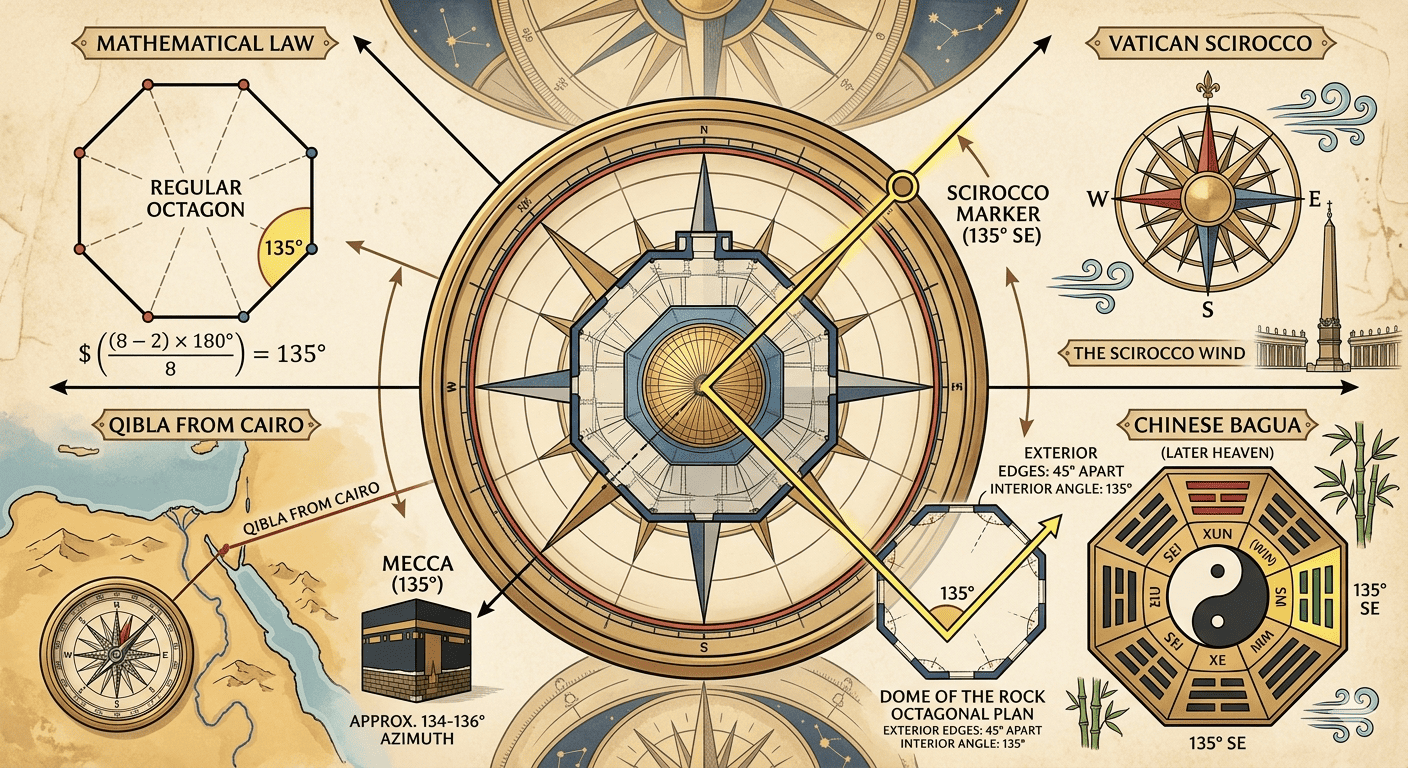
The Qibla—the direction Muslims face during prayer toward the Masjid al-Haram in Mecca—provides a verified instance of the 135° bearing in Islamic religious practice. Scholars including David King have documented that early mosques in the southern Levant (Palestine, Jordan, Syria) were oriented at Qibla directions of approximately 132–135°, including orienting toward the rising of the star Canopus (which rises at approximately 135° from the Levant). The modern great-circle Qibla bearing from Cairo to Mecca is approximately 134–136°.
In biological phyllotaxis—the spiral growth of leaves, seeds, and petals in plants—the governing angle is the golden angle, approximately 137.5°. This is derived from the golden ratio and produces the Fibonacci spirals seen in sunflowers, pine cones, and many other organisms.The mathematical relationship between the octagonal angle and the golden angle is precise: 137.5° − 135° = 2.5°. The two angles, one from pure geometry and one from biological growth, sit just 2.5° apart. This proximity is a genuine mathematical observation, not an interpretation.
The Halbach effect
A wheel consisting of 120 magnets (5 rows of 24) can produce a strong Halbach effect when arranged with the correct rotating magnetization pattern. A Halbach cylinder—which this configuration describes—creates an intense magnetic field on one side (either the inside or outside diameter) while cancelling it out to near zero on the other side. The number of magnets per row (24) is divisible by 4, which is the standard number needed to create a 4-pattern repeating circular Halbach array.Using a 5-row configuration allows for a robust 3D cylindrical Halbach array, will create a stronger, more uniform, and stable field than a single ring of 24 magnets. By arranging the 120 magnets with the correct 3D spatial rotation of magnetization, you can focus the field strength onto either the outer diameter (useful for rotors) or inner diameter.
Reference
https://www.duramag.com/techtalk/halbach-arrays/how-a-halbach-array-works-in-circumferential-and-planar-arrays/
V-shaped magnets or optimizing magnet geometry (such as tapering or using specialized shapes) can enhance the Halbach effect by concentrating magnetic flux more efficiently, reducing leakage, and increasing peak field strength on the operational side.
Reference
https://www.sciencedirect.com/science/article/abs/pii/S0924424713003907
Magnetic Compression
When the north poles of 2 magnets face each other, magnetic flux lines are forced to bow outward and crowd together, increasing the local flux density in that region. Hence compressed energy can be released past the point of maximum repulsion. Hence a system can store potential energy as the magnetic poles approach, releasing it as kinetic energy once they pass the energy peak. This is exactly like pushing a ball over a hill — it accelerates down the other side. The force is F = −∇U (the negative gradient of potential energy). What you feel as a "snap" or release is the system moving from high U to low U as quickly as possible. If you define the reference measuring from the last stable point at 90°, then the next unstable midpoint is at 90° + 45° = 135°. So 135° is really just "one and a half pole pitches from a reference point" — it's only meaningful if your starting reference is already at 90°. "135° = 90° + 45°, representing the moment a magnet has passed peak resistance" is correct for a specific 8-pole geometry with that reference frame.
The Great Pyramid of Giza
The Great Pyramid has a slightly concave face on each of its four sides, making it technically eight-sided—a genuinely obscure architectural fact documented by aerial photography in the 20th century. The concavity is most visible from the air near equinox conditions.
Coral Castle’s sits at approximately 25.5° North latitude.
If you double Coral Castle's latitude (25.5° × 2), you get 51°.This 51°
figure is within less than one degree of the Great Pyramid of Giza’s
slope angle of 51.8°. The Great Pyramid is technically an octagon
(8-sided) due to its slightly concave faces—meaning its interior angles
are 135°.
Ed's original magnetic motor
orignally contained 16 magnets stacked 6 high
with 16 gauge wire. Today the
wheel has 24 magnets for better torque and speed.
6. The Chinese Bagua and the 135° Position
The Bagua (八卦)—the octagonal foundational symbol of Chinese cosmology used in Feng Shui, the I Ching, and Taoist philosophy—is an independently arrived-at expression of octagonal geometry. In the Earlier Heaven (Fuxi) arrangement, Qian (Heaven) sits at North (0°) and Kun (Earth) at South (180°). In the Later Heaven (King Wen) arrangement, Xun (Wind/Wood) occupies the southeast quadrant, with the specific placement of Xun at 135° consistent with standard Bagua layout.
The Vatican’s Scirocco windrose marker (a hot southeast wind, 135°) and the Chinese Bagua’s placement of Wind and Fire in the southeast quadrant at 135° represent an independently arrived-at convergence of cultural-geometric tradition across two unconnected civilisations.
Japan, the 135th Meridian, and Time
Japan Standard Time (JST) is UTC+9, based on the 135th meridian East. This meridian passes through Akashi, Japan, where Japan’s official standard time reference is set—established in 1886 during Japan’s Meiji modernisation period. The digital root of 135 is 9 (1 + 3 + 5 = 9), and the UTC offset is +9.
The Akashi Kaikyo Bridge, which crosses the Akashi Strait near this meridian, was the world’s longest suspension bridge at its completion in 1998, with towers 298.3 metres tall. The Ise Grand Shrine—the most sacred site in Shinto, dedicated to the sun goddess Amaterasu—is located in Japan and undergoes a complete ritual reconstruction every 20 years in a ceremony called Shikinen Sengu, a practice that has continued for over 1,300 years.
1.39 degrees
When looking at the physics of massive
continental ice sheets, a slope of just 1.39 degrees is a critical
geological sweet spot.
Glaciers are not just static blocks
of ice; under immense pressure, ice behaves like a highly viscous,
flowing fluid. When a massive ice sheet sits on a bedrock incline of
roughly 1.39 degrees, gravity exerts just enough shear stress to
overcome the internal friction of the ice without fracturing it
entirely. This tiny angle allows for "basal slip"—where millions of
tons of solid ice smoothly slide and deform over the landscape,
grinding down mountains, creating valleys, and steadily regulating the
flow of freshwater into the global ocean system.
Quantum Material Geometry: Twist-Angle Carbon Lattices
In the realm of natural carbon
structures, scientists look at how atomic layers interact. When you
take two perfectly flat sheets of carbon atoms (graphene) and stack
them on top of one another, they behave like normal, boring conductors.
However, if you twist the top layer relative to the bottom layer by a
tiny fractional angle, something strange happens.
At a precise twist angle of 1.39
degrees, a unique geometric phenomenon called a Moiré pattern forms. At
this exact 1.39 degrees threshold, the electrons moving through the
carbon lattice are suddenly forced to slow down and interact strongly
with one another. This atomic twist completely flips the natural rules
of physics, causing the material to spontaneously transition from a
normal conductor into a correlated insulator or a superconductor.
Nature uses these tiny fractional angles to completely rewrite the
quantum capabilities of matter.
The "Moiré pattern levitation" isn't
a single established scientific term, it typically bridges two distinct
concepts: optical illusion art where overlapping geometric grids create
the appearance of floating planes, and quantum physics where stacked,
twisted layers of materials float electrons at "magic angles" to
achieve superconductivity. In condensed matter physics, Moiré patterns
are becoming a revolutionary way to engineer the properties of
matter.Twistronics: When two layers of 2D materials (such as graphene)
are stacked on top of each other and slightly twisted, they create an
oversized, repeating interference pattern.This Moiré superlattice
fundamentally alters how electrons behave. By tweaking the exact twist
angle, physicists can force the electrons to interact in highly unusual
ways. This can successfully unlock states like superconductivity (zero
electrical resistance) and unique magnetic behaviors. While not true
"antigravity," this control over quantum properties is pushing the
boundaries of material science.
135° in Geometry and Architecture
• Interior angle of a regular octagon (mathematical law).
• The Vatican’s Scirocco windrose marker (southeast, 135°).
• The Dome of the Rock’s octagonal plan (each edge 45° apart, interior angles 135°).
• The Bagua’s placement of Wind/Wood at 135° southeast (independent Chinese tradition).
• The Qibla direction from Cairo to Mecca (approximately 134–136°).
The Number 9 and 135
• Digital root of 135: 1 + 3 + 5 = 9.
• Japan Standard Time: UTC+9, based on the 135th meridian.
• Pope Leo XIV: born in September (9th month); 135 cardinal electors.
The
Southeast Axis from
the Vatican (130–140°)
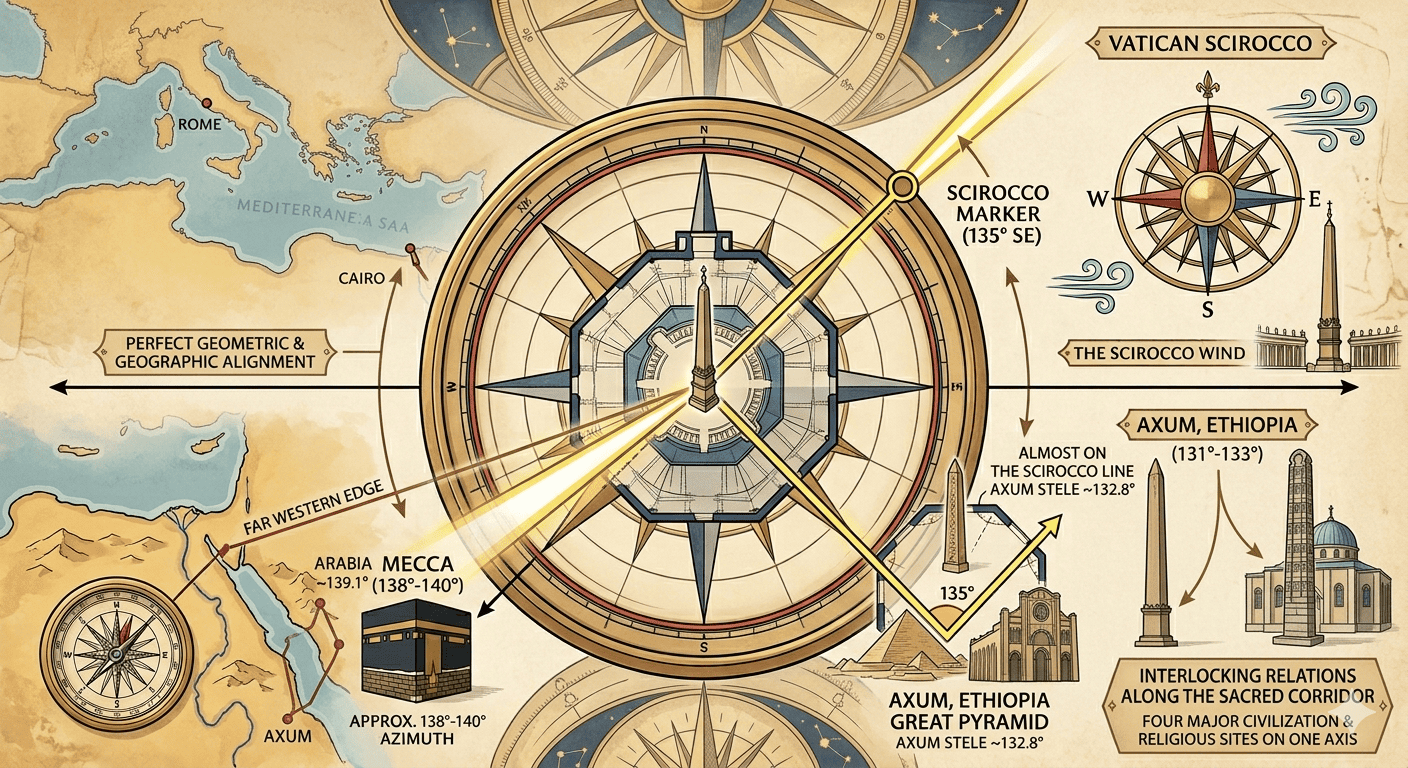
• Scirocco windrose marker at 135°.
• Axum, Ethiopia: approximately 130–133°.
• Mecca: approximately 138–140°.
• Heliopolis / Great Pyramid: approximately 128–130°.
Concluding Breakthrough Revelations
The corelations between Coral Castle and nature are not
just a quirky novelty; they exist as a a "node" in a global network. Ed
Leedskalnin knowingly encoded the same foundational numbers found in
the Great Pyramid, and Chinese Bagua—22.5° (its angular symmetry), and
51° (a
doubled latitude matching the pyramid's slope, which rooted in 135°
octagonal geometry).
References
The following sources are cited in the original fact-checked document or correspond directly to verified claims:
[1] Vatican Apostolic Archives / historical accounts of the 1586 obelisk relocation (Domenico Fontana). Standard Renaissance architectural history.
[2] St. Peter’s Square – Wikipedia and Vatican official documentation (windrose markers, 1852, Pius IX).
[3] Historical records of Domenico Gigli’s 1817 meridian line installation in St. Peter’s Square.
[4] Centro del Colonnato – Vatican architectural guides; Bernini’s elliptical colonnade design documentation.
[5] Official Vatican sources: dome height of St. Peter’s Basilica, 136.57 m.
[6] Baconnier, S. et al. (2002). “Calcite microcrystals in the pineal gland of the human brain.” Bioelectromagnetics. European Synchrotron Radiation Facility data.
[7] About Edward Leedskalnin – Coral Castle official site and biographical records.
[8] Sacred Architecture – Coral Castle (visitor documentation and photographic records).
[9] Robert Francis Prevost (Pope Leo XIV) – multiple news sources, May 2025.
[10] Cardinal electors in the 2025 conclave – news reports, April–May 2025.
[11] Swiss Guards expansion to 135 members (2018) – Vatican press office and security journalism.
[12] David King – scholarship on early Islamic Qibla orientation practices.
[13] MUL.APIN – Wikipedia and standard Babylonian astronomy scholarship (~1000 BCE).
[14] Kebra Nagast – Ethiopian royal chronicle, 13th century CE.
[15] Operations Moses (1984) and Solomon (1991) – Israeli government and historical records.
[16] Feynman, R.P. – on the fine-structure constant: “one of the greatest damn mysteries of physics.”
End of Document
Article by Scott-Rauvers
References: stpetersbasilica.info; Cort Lindahl, The Geomancy of St. Peter's Square; David King and Paul Wheatley (Islamic Qibla scholarship); Kebra Nagast; Edward Leedskalnin, Magnetic Current (1945); Wikipedia entries: Qibla, Bramante Staircase, Fontana della Pigna, Swiss Guard, 2025 Papal Conclave, Edward Leedskalnin; Smithsonian Magazine, "The Keeper of the Ark."
